






How To Get Out Of Pain In 30 Days (On Your Own):
(Includes “Paper Hair Trick,” Massage Techniques & Action Plan)
There is a process for developing the ‘feel’ of an expert Physical Therapist, and anyone can do it. When you learn how to use your hands as another set of eyes, you can immediately understand why you’re in pain, tight, or weak; then, act accordingly by releasing tissue back into place to create a healing/growth state in your body.
In order to develop skilled touch, it’s important you follow/learn these 3 steps:
- Develop Palpation Skills: Paper Hair Trick
- Find Tissue Abnormalities: Learn About Tissue ‘Feel’
- Get Rid of the Problem: The 3 Most Important Massage Techniques To Release Tight Tissue
Step 1: Develop Palpation Skills
Palpation skills are the difference between ‘knowing’ what’s wrong and having an idea. Most of the time, you can learn more through your fingers than through an X-ray, MRI, or CT-scan; the reason being, you can correlate what you feel when you touch/press on something to a feeling of pain, discomfort, or that nothing is wrong.
If we took MRI’s of the entire US adult population, about 50% of us would show at least one herniated disc, but this doesn’t mean that we are all symptomatic. If a disc presses on a nerve root, you’ll know about it. Likewise, if you press on an area that is sensitive, you’ll also know about it. When you’re able to differentiate between the feel of one type of issue vs another, you’ll be able to quickly resolve whatever challenge you face, albeit pain or inflexibility.
Pull one hair out of your head, place it on a table in front of you, and lay a single piece of paper on top. Now, close your eyes and comb over the paper until you find the hair; continue to drag the hair underneath your finger and around the paper until you lose it. Repeat for 15 minutes/day. Within 2-4 weeks, you’ll have an incredible sense of touch.
WARNING: I decided to get a bit crazy on this one and take things to the next level by placing 2 sheets of paper on top of the hair. The end result, over a period of 3-4 months, was hypersensitivity. The free nerve endings in my hands over-developed, and I began to feel pain instead of ‘hot’ or ‘cold.’ It’s nice to have X-ray hands as a Doctor of Physical Therapy, but you may not want to go this far.
Step 2: Feel For Tissue Abnormalities
Once you learn ‘how’ to feel, it’s time to apply that skill by learning about various types of ’tissue feel’ in your body. Each type of tissue feel occurs for different reasons and will point towards the root cause of discomfort, along with a plan of action to resolve it. When you’re able to tell the difference between abnormal muscle tissue feels, you’ll be better equipped to know how to handle them; similarly, when you can sense ‘constant tension’ in a muscle, it may be indicative that you should be working higher up, on a nerve or section of your spine. This can be a game-changing difference in your outcome and level of success.
Here’s a video and table that will help you understand and test tissue feel on your own body:
Tissue Feel Test:
Instructions for testing feel: Press firmly down with one finger and note response of body/skin; now repeat with entire palm of hand and observe again. Finally, perform the wringing technique to the surrounding area to judge your general level of restriction.
| Type of Tissue Feel: | Description: | When You’ll Feel This: |
| Normal | normal skin elasticity, no pain with palpation, normal temperature and sensitivity | touch anywhere that is not in pain; you’ll get an idea how your body/skin are supposed to react. |
| Boggy | bounce-back sensation when you press on it, as if there is fluid gently pushing back against you | acute or chronic swelling as a result of a new or old injury (typically muscle injury) |
| Soft | feels like something is missing (not enough muscle or depth) | can occur from chronic swelling, nerve injury, or other serious trauma leading to muscle wasting |
| Hard | almost bone-like, or a very specific area where something feels firmer than it typically would, as if calcium/bone were trying to deposit | occurs as a result of over-healing and is basically a build-up of calcium over time; often times, this occurs near an old fracture, scar tissue, or other chronic tendonitis that turns to tendinosis |
| Tense | feels almost as if you are ‘flexing’ your muscle, or attempting to contract it; often times, it’s the entire distribution of the muscle, not just one section | over-excitation of nerve root in related spinal segment, near muscle, or in direction of spine; also can occur as a protective mechanism when a surrounding muscle is injured or needs stress taken off |
| Bundled | feels as if multiple muscles are a single muscle, in that all muscles are tense, and it’s hard to distinguish between them when you perform the wringing technique (Tissue Feel Test video explains this) | very typical with fascial restrictions from inflammation or old injury; also occurs when exercising in an imbalanced way, or when your nervous system doesn’t properly distinguish between individual muscles due to poor muscle recruitment strategy |
| Hot | warm to the touch; occurs with injury and is notably warmer than surrounding tissue | following acute injury or strain; could be indicative of circulatory issue if associated with swelling, pain, or any other sign/symptom of vascular disease.CAUTION: especially in lower leg or following surgery, serious injury, or with family history — could be indicative of a blood clot and should be screened to be sure. |
| Cold | cold to the touch, as compared to surrounding body parts or the rest of a muscle | occurs with poor vascularity or restriction of blood flow from a particular area of a muscle or tissueCAUTION: if a body part is chronically cold, or suddenly cold, it could be indicative of a circulatory problem and should be screened by a doctor immediately. |
| Pulsating | light to moderate: faint sensation that is barely noticeable, but feels like a very distant heartbeatmoderate to heavy: throbbing sensation that feels similar to putting your hand over your heart, but on another body part (a bit less intense) |
occurs when blood flow returns to a muscle, tissue, or body part after having been restricted; often noticeable during or following massage techniques, warm up, or any form of myofascial releaseCAUTION: loss of a pulsation from an area where you would typically expect it, or overly strong anywhere in your body could be a sign of a circulatory issue and should be screened by your doctor. |
| Electrical | “zinging” sensation that feels like a super light version of touching an electrical socket (don’t do this!); otherwise described as a moving sensation underneath your finger/hand | occurs when neurological signal returns to a muscle, motor point, or body part after having been restricted; often noticeable during or following myofascial release |
| Hyposensitive/Numb | disconnect between what you see and what you feel — when you place your finger/hand on a body part, you expect to feel the way you do everywhere else, but there’s less sensation than you’d expect. | occurs with nerve restriction (can happen through myofascial restriction) or nerve injury; also can occur through poor circulation and is very typical in people with Diabetes in their hands and feet |
| Hypersensitive | disconnect between what you see and what you feel — when you place your finger/hand on a body part, you expect to feel the way you do everywhere else, but there’s more sensation than you’d expect. | Occurs with nerve irritation or stimulation, as well as return of blood flow to a body part. e.g., when you uncross your legs after having sat in the same position for awhile and you feel pins and needles — typically more localized than an entire leg or arm when noted with tissue feel test. |
| Painful (sharp or dull) | your body doesn’t give you enough time to really observe the feeling; instead, there is an immediate pain response (either sharp or dull) | sharp: acute injurydull: muscle soreness, old injury, chronic tightness, overuse of a particular area of a muscle |
The goal is to figure out any ‘abnormal’ tissue feels you have in your body. These are the areas of your body you’ll focus on with the massage techniques below. Recommended locations for checking are:
| Locations: | Anatomy Diagram: |
| Sub-occipital Muscles | 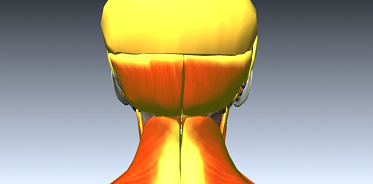 |
| Traps | 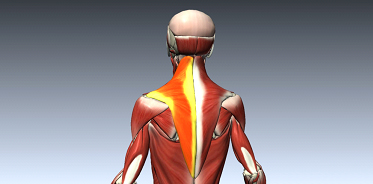 |
| Pecs | 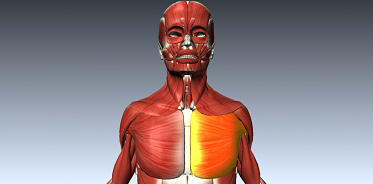 |
| Rotator Cuff | 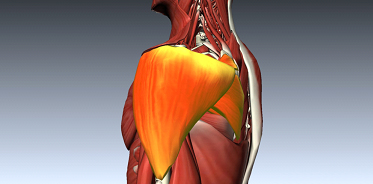 |
| Q.L. | 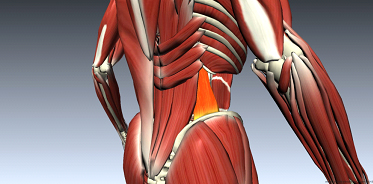 |
| Psoas | 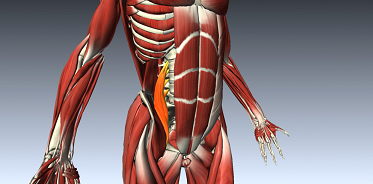 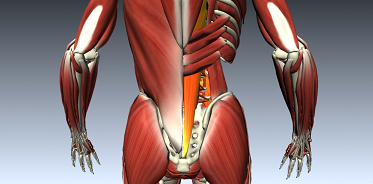 |
| Piriformis | 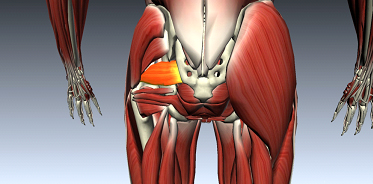 |
| Glute/Ham | 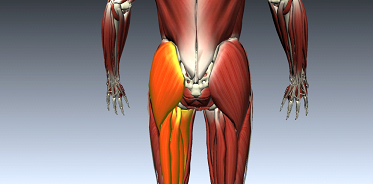 |
| Hip Flexor | 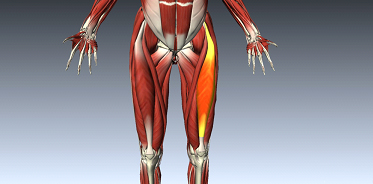 |
| Femoral Triangle | 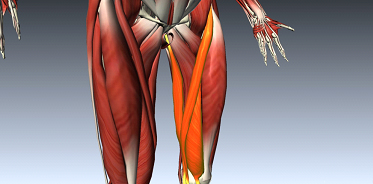 |
| IT Band | 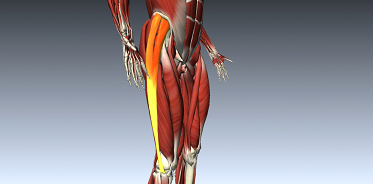 |
| Gastroc/Soleus Complex | 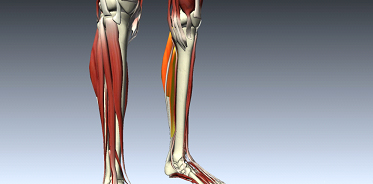 |
*NOTE: Posture can also affect pain in a dramatic way. If you aren’t feeling tissue abnormalities, or you’ve already resolved them, here are some postural exercises that have been shown to improve posture dramatically within just 14 days.

Step 3: Get Rid Of The Problem
Finally, after you have identified where the problem or sore spot is, it’s time work specifically on your source of discomfort and eliminate it. The key is to find the area of greatest soreness and work on this specific area. Often times, a domino effect takes place, where you release the ‘mother knot’ and the rest of the tension disappears.
The three most important massage techniques to learn are:
Each massage technique is used for different types of tissue feels and for different issues. By learning how to choose and implement the proper massage technique, you’ll achieve the fastest possible result. Here’s a summary table that may help:
| Massage Technique: | Purpose: | Abnormal Tissue Feels This Is Good For: |
| J-stroke | release knots, tight tissue, or muscle restriction (superficial or deep, but best used superficially) | Hard, Tense, Bundled, Hot, Cold, Pulsating, Hyposensitive/Numb, Hypersensitive, Painful |
| MLD | get rid of swelling/inflammation, improve range of motion for a restricted joint | Boggy, Soft, Tense, Bundled, Hot, Cold, Pulsating, Electrical, Hyposensitive/Numb, Hypersensitive, Painful |
| Myofascial Release | release tension of multiple muscles, tissues, or muscle groups at the same time by using the philosophy of an “anchor point” pulling on everything else; works extremely well with acute and chronic issues by targeting the specific techniques demonstrated in the video below | Boggy, Hard, Tense, Bundled, Hot, Cold, Pulsating, Electrical, Hyposensitive/Numb, Hypersensitive, Painful |
Learning how to properly release tissue, get rid of inflammation, and restore myofascial length are paramount to your success. These techniques aren’t difficult to pick up, but they do require a bit of practice to become proficient. When used in combination, these 3 massage techniques trump just about any ‘therapeutic’ massage you can imagine.
30 Day Action Plan:
Let’s put it all together and give you a 30 Day Action Plan for Skilled Touch. A super small investment of time now will lead towards better health for you, your loved ones, and anyone else you decide to influence. Health is easy when you know the tricks and have a plan.
No advice or information is ever beneficial unless you know how to implement it easily. The best thing you can do to master skilled touch is block off 15 minutes/day for the next 30 days, as follows:
Skilled Touch in 30 Days:
Today – Begin Paper Hair Trick – 15 minutes/day is all it takes. Do this every day for the next 30 days.
Days 2-25 – Connect your body and mind — take notice of your environment. Every time you pick something up, use all 5 sense and really focus on ‘feel.’ Does it feel cold/hot, metallic or plastic, are there grooves? Do you feel it in the palm of your hand or through your fingers? If through your fingers, which one?
Day 26 – Learn ‘Tissue Feel’ by touching the specified areas above on your body that are both in/out of pain. Write down your findings and repeat on Day 30 to observe changes.
Day 27 – Learn J-stroking. Find a friend (I’m sure they’ll be happy to volunteer) and offer a massage. Learn to feel through your fingers and ‘sense’ if there are restrictions. Work on those restrictions with your J-stroke and take notice of the way they soften and go away. Have this friend come back in 2 days, ideally.
Day 28 – Learn MLD. This is a technique that can only help, not hurt; as such, we’ll have you practice on yourself. Find an area that is tight or swollen on your body and develop a touch for the least amount of pressure it takes to move your skin in both directions to create the elastic rebound effect you learned about in the video. Repeat all over your body or on enough body parts to get the hang of doing this with just a couple fingers, as well as your entire hand. You’ll notice certain contours of your body are easier to navigate with one or the other.
Day 29 – Learn Myofascial Release. It’s really cool if you get to work with the same person as Day 27, as you’ll begin to sense how these techniques can work together. However, you’ll be able to learn either way. Close your eyes, focus on your hands and fingers, cross your hands gently on your friend’s back, and then move ‘with’ his/her body. You’ll begin to feel the ‘give’ and ‘rhythm,’ as fascia unwinds. Remember not to press too hard — learn lightly, as the deeper techniques should typically be done by a Physical Therapist only.
Day 30 – Integration Day. Find an area on your body that is tight or sore and follow these steps:
Step 1 – MLD on closest watershed to this body part for 5 minutes, then move down gradually towards involved area and spend 5 more minutes. Reminder from MLD video (above): Watersheds are areas of greatest lymphatic flow and serve to stimulate the rest of your lymphatic vessels nearby (making it easier to get rid of swelling, faster):
- Carotid Sinus
- Axillary
- Inguinal
Step 2 – J-stroke on all of surrounding areas, following direction of whichever muscle fibers you feel. Basically, if you know your quad runs ‘top-down’ then you would work ‘with’ the muscle in that direction. If you don’t know, there’s still plenty of benefit if you pick any direction. — 3-5 minutes
Step 3 – Myofascial Release — now we’re taking a look at the bigger picture and finding the ‘trigger’ points that will have the greatest effect. Here’s a video cheat sheet (I’ve also included self-release techniques for body parts you can’t reach):
Step 4 – Re-test Tissue Feel from Day 26 and write down your notes. Cross-off all ‘normal’ tissue feels and repeat tissue feel test daily until all tissue abnormalities are resolved.

34 Comments
-
Thanks for this came at just the right time am going to apply this to a chronic problem .
-
my pleasure Bez 🙂
Please keep us posted.
-
Dr, Kareem I have been suffering with Trigeminal Neuralgia since 1986 I had Radiatherapy in 2000 and until the beginning of this year i was free now that it is back medication does not seem to help any suggestions?
-
-
-
This is AWESOME, Dr K. My current pain level is around a 2 at this moment, but I’m sitting; when aggravated by walking or doing anything else on my feet, it can get up to an 8 or 9 level pretty quickly, VERY reliably.
-
WOW!! Brilliant, thank you.
-
Focusing to start this on a chronic, taut, tense, bundled & painful (generally 4+/10 constantly) superior right trapezius with similar discomfort at inferior right occipital muscle areas. There is a transverse anterior/posterior indentation of approximately 1/4″ from base of cervical vertebra #8 to posterior clavicular area at spine. This is an old surgical scar where my first rib was removed. The ropiness has occurred for at least 3 decades with varying degrees of discomfort. When reaching with my right arm/hand to do self massage, an intense anterior forearm “locking” spasm occurs with 6+/10 electrical firing pain in right middle three fingers… so I’m using my left arm/hand to pursue this relief. Thank you, Dr. Kareem – this should help especially for giving a “method to end the madness” (- haha). PS I’d quit taking NSAIDs a while back and have not taken other pain meds except an occasional Thermacare patch to take the “edge off”.
-
PAIN LEVEL SCALE: 1 – no pain; 9 – cry out in pain; 10 Passing/blacking out)
Pain Level: Over all Body: 7
Right Shoulder: 8
Right Hip S-I area: 7
Head: 6
Eyes: 7 (Eye Socket Pain)
Right Elbow: 8
I have been in Deep Muscle Therapy since 2002 [Dr. Roy Strickland & Massage Therapist Glenn Ponthieux.) The “bands” that had formed in my body since being injured left me unable to turn at the waist; had to rotate hips to look behind me when I drove; I could not lift my right arm/elbow but 3 inches higher than my waist; I used a cane because the front right groin area would just “give out”; there was constant dull aching from the right shoulder down the back all the way to mid thigh; after 3 years of pain meds, I had to keep asking for stronger meds. I took 30 mg of percoset/oxycodone every 6 hours for minor relief. Because I could barely walk, I started doing hot water therapy.
As the 2 deep muscle treatments (per week), the 2 – 2 hour passive exercise sessions, and DAILY (some times twice daily) began to improve my muscle integrity, I am now able to not take so many meds, and have reduced the “expensive” treatments, I am at the point that my muscles are finally responding; HOWEVER, I still needed SOMETHING ELSE. I am a “TAKE CHARGE in the absence of orders” person, so I am REALLY excited to see results. Just as I worked out in the hot water and mild stretching, now I can actually be F O C U S I N G on my “trouble/hot” spots.
This article is so clear and concise and I can relate to the simple instructions, I am going to start on this today. The pain in my body needs daily manipulations and your method appears to be as tho someone else is doing it to me. -
I’ve completed the “Therapeutic Touch in 30 Days” program. Thank you, Dr. Kareem – much easier to find position of rest to sleep and my right superior trapezius is much less ropey and pain free unless I’m out of posture alignment as directed in your other videos. When I took my RN nursing classes in the 1970’s we were taught massage, but it was quite generalized in instruction. This is so wonderfully exact and multi-dimensionally effective! Such a blessing!
-
Also, my right arm is able to assist in the dual-hand watershed MLD and myofascial release with little to no “locking” spasm or pain. Yippee!
-
I am SO ridiculously proud of you! No, we all are. Outstanding work!
We’ll be in touch about coaching soon 🙂
-
😉
-
-
-
Thank you Dr. K – staying pain free in the right neck & shoulder area – flew today and it was great to follow-up with the MLD and myofascial release for preventive measures.
-
Was 10 miles from the EF5 Tornado at Moore, OK, – animal-sitting for my brother & huddled in the central closet with them. Post event experienced 7/8 of 10 tighntess and pain with mild neuro Sx’s in especially right hand. Performed MLD and myofascial release and trigger point release with relief. Had to repeat it during the week and am now steadily at 2/10 or zero – I’m liking this! Glad to be back home in Las Vegas. Sunshine!
-
You spelled Myofascial Release wrong on video title #3 in “The 3 Most Important Massage Techniques” section. Normally I’m not a stickler for this stuff, but you mention in the video to go to the Barnes’ website, that the URL is spelled the same way as the video title (which will be sending people to the wrong page).
-
thanks Poldberg! we’re on it 🙂
-
-
I’m SUPER excited to help you on this journey. If you have any questions, please don’t hesitate.
-
This is a fantastic article. I look forward to learning how to alleviate my pain and that of my loved ones. For the past couple of weeks i have been experiencing neck and shoulder pain-right now 0; when i bend my head right or left and when i bend it forward or backward 7 out of 10.
-
hmmm…
I wonder how your head posture is?
In the case of forward head or rounded shoulders, it really helps to line up the neck before doing these types of movements. The way to put the head into what’s called ‘axial extension’ — which lines up the vertebrae — is by keeping the chin down making a double chin.*
*IMPORTANT: The “double-chin” exercise should only be done gently and pain free.
From there, pain with movement may disappear (hopefully!), and the next step would be to loosen the muscles puling you forward (i.e. pecs, scalenes, SCM) and strengthen the ones that aren’t pulling you back enough (i.e. sub-occipitals, rotator cuff, middle and lower traps, posterior deltoids, rhomboids, lats, multifidi.)
Of course, be sure to check with your doctor and only do this with supervision if you feel there is any risk in any one of these movements.
-
and one other thought… if you find re-alignment of your vertebra makes you feel better, you may want to start using the ‘Wet Paper Towel Technique’ and icing every morning and night, as follows:
“Wet Paper Towel Technique” (for Icing)*:
1) Run cold water over a single paper towel, so it’s dripping wet, and place it directly on your skin.
2) Place ice in a thin, plastic bag (sandwich bag is idea; ziploc is a bit thick) and place the ice bag on top of the paper towel.**
3) Ice 5-7 minutes first thing in the morning, last thing at night, and anytime after you strain your neck with movement or exercise.
NOTES:
*It’s not particularly common, but some people have cold allergies and shouldn’t ice. If ice gives you rash or causes you pain outside of the time you’re icing, you may want to see a doctor and stop icing until you do.
**NEVER in an ice pack, it can cause freezer burn with this technique and doesn’t work as well.
-
-
-
I’d like all this info in a booklet form. This is too much good info.!!!
-
Does it matter if you missed a day and you pick it up the next day just moving the end Point one day later?
-
hey Daniel! I know I’m seeing this late, but I wanted to answer your question. I think it’s so cool that people are still learning from this blog post, and I’m going to check back in more often 🙂
Yep — just stay on track!
-
-
I don’t really have any pain– a little muscle soreness, but I can’t wait to try these techniques. I will start training for a marathon next month and I am very aware of muscle groups, training both sides of muscles, posture and core strength. This will really help me understand my body better.
-
I’m not in pain but this information is super! I plan to practice the hair trick and the exercises to improve palpation technique. Thank you Dr K for sharing your knowledge about the fascinating human body and to resolve various issues.
-
What can be done for someone who has had open heart surgery and has severe residual pain ever since in the chest area where he was cut open? He’s really suffering and the heart doctors are apparently of no help, in after care. Nerve blocking does not seem to be what he wants to do as it has it’s own problems. Any suggestions? I could have him write to you directly if you have a technique he could try. He’s a dear friend and I hope you can give me suggestions I can pass along to him. Thank you so much in advance!!! (P.S. The article above is fascinating to me!)
-
I suspect that myofascial restriction is playing a significant role after such intense surgery… tissue binds up and constricts in the chest area for a lot of patients I’ve seen post-op. These are exactly the right types of techniques to learn, or for him to seek hands on with someone else. At least, without evaluating him in person myself, that’s a good bet to say… always trust an in-person evaluation over any advice over the internet!
-
I had open heart surgery too. When this happens I carefully massage the area where it hurts. My dr says it’s a healing pain. Also I took aleeve and it helped me. Hope it helps your friend too.
Good luck.
-
-
Goodmorning Doc: I have Pain in my hell.I fill insert like nalty insert my hell I have lot of Pain Day Night Please Doc Help me
-
I need total knee replacement for my rt knee I had a torn meniscus and torn cartilage then I had a torn meniscus in my left knee and now I’m in constant pain every day. Some days is worse than others I’ve been in PT for this and habe started doing more of the relax and fingertip motion I was shown which sometimes it helps and other times it doesn’t. So on a scale of 1-10 I’m in a 7-8 on my rt knee and a 8-9 on my left knee some days it’s worse other days is somewhat better. But I’m going to try some of these things on here tonight after I get home from a mtg for avon.
-
thank you so much for that
-
This has been and will remain incrediblely instrumental in my goals to heal from a hugely traumatic life changing moment in my back health care that was significantly injured during a seizured induced fall out of a shower that resulted in my back health being compromised thoracic, lumbar, shoulder and neck pain injuries that have been overwhelmedly challenging to get back to good health day in day out for 4 years now; having levels of pain crucially leveling from moderate too high pain 24 hours a day. I hope to learn and apply what I’ve learned and keep reading, watching and hope to regain back health.. great series of web video content. Look forward too watching and learning more to help get stronger. Great work!! Thank you.. Lynn
-
Lower back pain 4, after walking for a while 6, after any bending 8
-
From a few of your blogs, I now know I’ve had a herniated disc years ago and didn’t know it, Drs neither, numbness in the front of my thighs; now suffer from SI joint pain from my hip/glute, psoas/piriformis/glute areas, mostly humming on a 1, I know it’s there, but can do everything fine; up to 4 or 5, I’m in aching pain or gasping/shooting pain and any movement is cautious, sit, stand, lie, walk slowly, 3-4 times a year; 9/10 is excruciating, I can’t stand up straight and can hardly put 1 foot in front of the other, thankfully not very often it gets that bad now. Have a glute flex exercise that sometimes helps (and drugs) and a massagest that gets deep into my glute; well she says its a light touch and I feel like she’s drilling it. 😉 Now started with a bulge popping out behind my left knee; it always crackles when bending/squats/loo, I can’t do lunges, but sometimes after walking or even not, something pops out the back of my knee suddenly, just below the crease and my knee swells and stiffens; the bulge itself is sore, but I try rub it out or ‘back in’ and just ‘move around’ the swelling around the knee cap. The wonders of being 40-something, as my brother reminds me!
-
I have been experiencing what I think of as hip pain in my right hip for many years. It started when I was running 2-3 miles 3 or so days a week about 20 years ago. I am 74 and no longer run due to this and other issues. The pain has gotten worse over the past couple of years and now can get pretty severe. It is definitely a “use” pain. If I am inactive, there is no pain. I have a “steps” app on my phone. If I walk 3,000 to 10,000 steps in a day, the pain gets bad enough that I need to get off my feet. I had surgery on my left ankle about 6 months ago and discussed my hip pain with my orthopedic surgeon. He said that if I had a problem with my hip joint, I would feel pain in my groin area, and that most likely the pain I am experiencing is due to bursitis for which he suggested icing. I do get temporary relief with icing, but the pain keeps coming back. I would be interested in your thoughts.


Comments are closed.