







I suggest we take a fresh look at our education system. Instead of teaching:
- Math
- Science
- History
- Literature

Why aren’t we focused on survival and optimization of the human species? After all, it stands to argue our real ‘purpose’ on this planet is to survive.
You see, every ‘other’ species on Earth seeks survival of the species, focuses on that single goal, and lives as long as possible. As humans, we manage to overlook this important goal due to our success as a species to-date. Yet, a focus on survival is precisely how we became the most abundant species on Earth.

Instead of studying subjects and topics that ultimately are forgotten as we grow older, I propose we re-do our school system to study:
- Brain
- Body
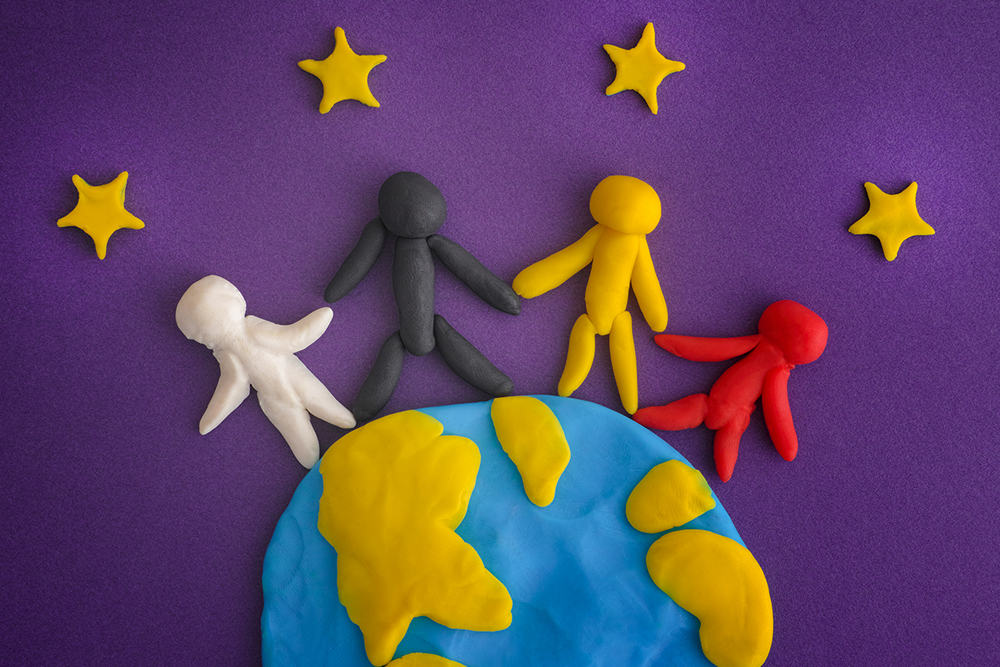
- Planet
- Co-existence
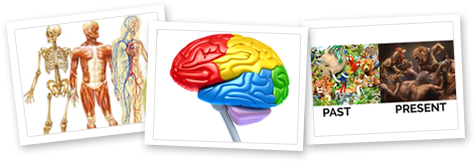
In doing so, we can still teach many of the important topics that have an impact on our careers, success within our families, and ability to communicate. Let’s take a closer look at each of the four topics above, and how each one can be sub-divided to give us the ‘core’ content we need for our society, but with a shifted focus and purpose to improve survival of the species:
- Math — focuses on analytical skills, rudamentary mathematics to be able to add, subtract, divide, multiply, etc., and memorization skills.
- Science — focuses on ‘how’ things work, ability to recognize patterns and learning curves from our predecessors, and higher order thinking.
- History — focuses on understanding ‘who’ we are, based upon past actions of our ancestors, ‘what’ happened that led to our current state of existence, and assumes we can foreshadow what’s to come as a result of what’s happened already.
- Literature — focuses on our ability to read, write, and communicate effectively, amongst humans.
So, instead of losing these core topics and skills, why not build this into a more ‘sensible’ school system? Let’s take another look at our ‘new’ topics, and see how it all fits in:*
 Brain* — divide by lobe or section of the brain:
- Frontal lobe — higher order thinking, movement planning, movement execution
- Temporal lobe — auditory sense / hearing
- Occipital lobe — vision
- Parietal lobe — sensation and sensory integration (processing vision, hearing, touch)
- Corpus callosum — olfactory, or smell; primitive memory and imprinting
- Language comprehension / acquisition
- Language communication / expression



 Body — divide by function, as it relates to survival:
- Nervous system/Emotional state
- Digestive system/Nutrition
- Endocrine system/Hormonal regulation
- Respiratory system/Breathing
- Lymphatic system/Healing/Immune health
- Integumentary system/Skincare
- Skeletal system/Bone health
- Circulatory system/Blood health
- Muscular system/Muscle health
- Urinary system/Filtration
- Excretory system/Poop health
- Movement execution/Coordination
- Reproduction/Sex
- Taste

 Planet
- Geography
- Topography
- Earth’s resources/Geology
- Species/Diversity
- Culture/Sociology
- Other planets and life potential

 Co-existence
- Species interplay
- Lessons from our past (species history & projection for our future)
- Human impact through technology and innovation (i.e. carbon imprint, ability to save or eliminate use of Earth’s resources, exploration, etc.)
- Evolution/Evolutionary theories
- Religion and religious impact across time
- The role of money in society
- Putting technology to work for-us

While studying higher order thinking, we can work on memorization skills, analytical skills, and how things work; in doing so, we’ll naturally call upon mathematical skills and facts of science that require higher thinking. While studying language comprehension and articulation, we’ll naturally call upon skills in writing, reading, vocabulary, and spoken word.
However, take a look at what else we’ll cover (and what gets eliminated that is pretty much forgotten by all of us within 5-10 years of graduation from high school.)

Instead of our current system, we’ll have an understanding of how to maintain abundance, expand and grow as a species, and increase the chances we can protect our most vital resource — Earth — while we grow. Perhaps most importantly, we’ll understand how to do this without sacrificing the life of other species.
By raising our children with the intent to protect human race, this planet, and other species, our goals become different, war no longer makes sense, and religious battles cease to exist. A new level of mutual respect, admiration, and cooperation emerges.
I propose we start a new school system, within the boundaries of what ‘home schooling’ allows, but with much more depth and purpose than most home-schooling programs. Here’s how I recommend we do that, as a starting point for this conversation:



What do you think? Do you agree or prefer we maintain our current standard of education? Also, what have I missed that you feel is an important part of our education?
I am seriously considering re-vamping our education system, with a select group of individuals committed to making this world a better place, and I’d love to know if you think this is worth the massive undertaking I feel it’s worth. I would also love to know if you are interested in pursuing this with me.

36 Comments
-
I think it would be a great idea! I agree with you that we’ve missed the mark when it comes to how we are educating our kids. We certainly are not taking the wholistic learning approach which is what I think you are more or less suggesting. I would be happy to join you in your pursuit to re-vamp our educational system.
-
Thanks Chris! I’ll be in contact once we have a better idea, all around, of who’s interested. I appreciate you and your input.
-
-
As a homeschooling mother of three, the idea is very interesting. We’ve used delight directed learning and topical studies to keep each child interested and involved, while integrating the practical applications and knowledge needed to further study the topic. This sounds very similar to what you are proposing.
It seems, as an overall concept, this is great. Where I see hiccups or road blocks would be in base system beliefs on “the beginning” since there are very strong feelings on both sides (i.e.:evolution/creation – big bang/God breathed).
What are the ideas behind testing?
As much as we all hate tests, after giving none, then some – there is a place for each of us to grow and learn with testing. Some states are very strict on their requirements, home-schooled or not, on state testing at certain grade levels. Not to mention, when the students are ready to take their PSAT, SAT or ACT, they will need the practice of some tests to help them. This is a very controversial topic with, again, strong opinions on both sides.Also, you mention current home schooling has the limitation of a single teacher. This is not necessarily so, unless the family chooses it to be that way. There are so many options for co-operative teaching and learning that if you are not careful, you are never home because you are always out on a group learning adventure, this could be positive and/or negative:-)
Will there be preparation for meeting state standards?
An item to consider is the fundamentals each child should have at each grade level. There is no perfect system, granted, but all systems must keep in mind a student may come from another system into one like you have mentioned and an integration process would have to be considered. As well as students who may choose the above system for a few years, and then decide they want to go to “building school” (this is what my children have always referred to it as since we “home” school, the alternative is in a building). If they transfer to a public or even private school program, will they have the basic skills to adjust to the new learning environment and succeed.Our goal should be to prepare and provide for the student in a way that best enables them to succeed in all areas of life, which would have to take the idea of transition or change to another system into consideration.
I would be interested in walking this road a bit with you a bit, though I’m not sure if I’ve much to offer.
-
hi Toni,
Great thoughts and points here — thanks for adding to the discussion.
I’ll go through your questions, one by one, but am encouraging anyone else to weigh in and offer their opinions, as well:
1) Beginning — God vs Evolution — I’m not sure we need to cover this, but if we do, I think we would present both sides, since there are 2 very common opinions out there. I personally take a lot of satisfaction out of learning about both religion and evolution, and forming my own opinions. I think this is where our children can learn to understand how society thinks about things, and then parents can choose a more formative tract with their children for religion through church or the like, on their own. (rather than have this be a “religion” or “science” based school.)
I defer to other experts here, rather than making a decision on what people ‘think’ is right. I would propose we find the foremost expert on theology and have that taught, and same for evolution. Then, have a class discussion.
2) Testing — I believe it’s important that a new model of schooling be able to show proficiency with all tests and measures that are currently important to society. However, since so much time is wasted in the traditional school model, I don’t think this part is hard.
For example:
a) Testing to test — this category of testing is to make students proficient at reciting information and performing under pressure. This can be simulated with any information taught.
b) Testing for rank — this category of testing is to standardize education, so it’s important our students show proficiency and above average to excellent scores (includes MAT’s, SAT’s, etc.) — in my experience, this is much more about ‘how’ you take the test than the information on it. And, much of the information on it will have crossover to other subjects we teach. For example, basic mathematics will still be something covered in this school, but under a different subject and with less emphasis. Due to the growth our students would be able to experience in analytical skills and memorization, the learning curve should be shorter and easier to “catch up” for an exam of this format/type.
When it comes to PSATs and SATs, I managed to perform well, in spite of myself. I happen to be someone who struggles with multiple choice tests — as I can create a convincing argument for nearly every response in most cases — so I had to be tutored. What I found out was weird stuff, like:
If a question begins with ‘which of the following’ then it is either ‘a’ or ‘c’ 80% of the time.
…and that type of thing. This helped me eliminate incorrect answer choices and make an educated guess. I used these techniques taught to me to excel both in school and on the SAT’s, GRE’s, etc.
Again, this is why I find these exams to be overrated for how they actually rate performance. If you have the ‘key’ to how examiners put them together, then you are taking a different test than someone who simply studies information. And the gatekeeper is often money, which seems wrong.
c) I love that people are getting together for cooperative teaching. This is both inspiring and pointed, in that it suggests an idea like this could really take.
d) State and national standard will need to be met, so this can be replicated on a larger scale and truly change the educational model. Where those standards are not sufficient, we would need to lobby change, but that’s down the road… and after we will have proven ourselves.
e) Integration — the reality is that this will happen, but the hope is that we will create greater change that makes this less and less relevant over time. In the case of integration, the basics to pass each grade level will be taught, so that part will be considered. If we are to rent space and use teachers from other schools to facilitate classroom discussion, this means the exposure will already be there. However, there will be change. “Our” students will have to rely on their ability to ‘think’ better, use their brains to their full capabilities, and excel based upon the skill set we’ve offered them to date.
I agree we need to prepare them to succeed in all aspects of life. That’s why I think mastering the ‘brain’ and ‘body’ are so important.
As for whether or not you have much to offer — you’ve offered us so much already. Thank you for weighing in and considering this so carefully. I appreciate you, as will many others who read your comment.
-
-
Your ideas coincide with mine in many ways; you need to know that what you are proposing is being done right now. I suggest you research and then visit these programs before committing funding to your ideas. The concept of thematic/integrated approach is part of what you are suggesting: Such an approach can be facilitated by great teachers working ALONE in a classroom. The key is small ratios and a teacher who is able to manage having experts visit the classroom or taking students to the expert. The best classrooms of this genre have teachers who have the energy and intellectual capacity to see each student as an individual with individual interests who can become themselves experts in the classroom. These places exist in Canada for sure and I believe in the USA.
The biggest fly in your ointment is any discussion of parents “with the means”. I abhor the idea that wealthy parents should think of their own children first when budgeting; we need schools to be a community. Compassion is a vital attitude to be taught to and encouraged in our youth. Compassion starts at home.
Vancouver, BC has the poorest neighbourhoods in Canada and the wealthiest. This has always been a source of great shame for me. Seldom do the wealthy see that they are part of the problem and that they need to share their resources with children with less. Before sending their child on a great trip, they need to determine whether they might be able to help a child in poverty do the same trip. Compassion/Community. Look to Nepal or Tibet for examples of compassion/community.
My wife was a Principal (now retired) in various elementary schools in the heart of this poverty; I can tell you that the stereotype of “down and out” parents on drugs or with mental illnesses living on skid row was and is wrong: Most of the parents were hardworking – often needing two or three jobs to make ends meet – and very loving. Their children were frequently stellar people, loyal, compassionate and resourceful. Born into families who could not afford those wonderful experiences of which you speak. My wife and I raised money to help her students have some of these experiences.
We just returned from Switzerland where we visited the school from which she graduated. When she went many years ago, a middle class Canadian family could fairly easily afford such a year away for their child. Now the parents we met reckon at least $100,000US is needed. The classroom education itself was very average but was augmented by many trips throughout Europe and Africa. The 17 and 18 year old students were typical wealthy kids: polite to possible influential strangers, aggressive, assertive and totally unaware of their luck (sorry, these too are slightly unfair generalizations, sadly borne out by my experiences with the wealthiest children in Vancouver/West Vancouver and my having attended one of the premiere private schools in the country as a child – on scholarship).
Any school/program that would get my support would need to be aimed at students from all socio-economic backgrounds (children thrive in a community of diversity), would need to make it clear that wealthy parents should share their “luck” and would have a robust bursary program.
Incidentally, I ran such a program before retiring. “My” parents were happy to share: they supported the bursaries, they encouraged diversity. Many years ago when one of the families returned to Taiwan, the father asked me if he could send money to my wife’s (inner city) school; he did so and continued for at least a decade, and this became a bit of a tradition among especially Asian families who who returning to tend a business (for example) in Hong Kong, India and so forth.
An aside: I have supported many homeschooled students and their parents and have found most were excellent facilitators of their children’s education, an education that looked surprisingly like what you are describing.
You probably travel around the USA for fitness and sports med clinics; I suggest that you visit the programs that sound like what you propose. Some will be disappointing; some will be enlightening.
One last comment: a school without wilderness experiences is missing a vital component of any child’s upbringing.
-
Hi Barry!
So wonderful to hear from you. You’ve made an excellent point about the financial part… but, to be clear, I meant more than money. You see, many parents would only allow such an experience (traveling and learning about history, wilderness, etc.) with their company/supervision. This may be very limiting for many, while I have a job on the internet and with my hands, so I’m ‘afforded’ more opportunity to do so.
As for brining others with me/sponsoring others, and encouraging there to be funds that prevent socioeconomic discrimination, I’m ALL for this. I also have family that both ‘has’ the means and ‘does not have’ the means. I want the best for all my family, and everyone they know, just as you do. (and others whom I’ve never met — this is about REAL change.)
Do you happen to know of some examples of schools I can visit? I’m happy to travel and check them out. Sounds awesome, and I’d prefer for their to be a unified front, and ideally accepted model, in order to do this.
This goal comes from the fact that I currently have a 1.5 year old child and am looking forward to his education. I believe he deserves more, and I also look at the state of the world. While living in the West, it seems we are at peace most of the time… but, overseas, that’s not the case. People are still at war, and arguably, as much as ever.
Talks of peace are rejected by people who are raised to believe peace is wrong. We are fighting ourselves, dying, and losing as a human race with this attitude. For more information on how we are damaging Mother Earth, please check out this interview I did with Graeme Sait — really revealing: http://drkareem.com/fitness-interview/helping-humans-survive-through-food-farming-compost/
I think it’s time we stop fighting, master ourselves as a species, and invest ourselves in protecting our home — as one. Then, figure out how we can ‘act’ as the higher species and save more animals that are quickly becoming endangered and dying. That’s my motive, here. A better place for my children, and their great, great grandchildren. (Not socioeconomic discrimination — and this might mean that as many people travel and see what’s going on, what has gone on, and what is possible, learn from it, and collectively come up with solutions.)
As for profitability of this model of school — I have no intentions surrounding this, at least at this stage. It stands to argue there are benefits to both the non-profit and for-profit models; the easiest to digest about for-profit is that it can grow more quickly and spread more virally. Of course, the non-profit is the most appealing from a goodwill standpoint and point of self-pride, but it has to work.
Does this help clarify my position? I certainly appreciate yours, your wisdom, and your experience.
I would be very interested to learn from others who are doing this already. Thank you.
-
-
I am very excited about what you are proposing, and have thought alot about how we need to redo our education system from the ground up. As it is now, we are trying to patch up an old paradigm which no longer applies to the world we live in. The original industrial revolution which sparked our ideas for an educational curriculum is long gone, and we need to be focusing in a new direction. I look forward to seeing this develop.
-
Thank you so much, Dina!
-
-
What an all encompassing idea! Too bad we have people in control who want their knowledge taught! Not the truth, just lies for reinforce their agenda! Thank you for putting these concepts out there. I’m going to share it and get it moving! Thanks Dr. K.
-
Thank you!
-
Great to hear that you are better! AND thanks for all you & Tim send me!
-
So sweet of you to say! Thanks. It’s been quite a journey, and I’m super happy to be in the position I’m in today. Very grateful to be alive and well.
And you’re welcome 🙂
We’re happy to support you with your health goals. It’s our passion.
-
-
-
-
First, thank you Dr. Kareem for your Double Edge Fat Loss Program! Just finished my second workout. Never sweated so much so fast. I felt the different muscles all over my body, even two days after the workout. Awesome! Will share with my buddy.
Regarding your educational ideas, they sounds wonderful. I love reading and taught my children the value of an education and knowing how to read. They know how to think for themselves and live with others in this society. Knowing how to feed your brain and body is of up-most importance to be successful in academical, work, and person life. This is also most important to ones health. Helping people to think for themselves and make good choices that will impact both their lives and society is a fight worth the undertaking. Basicly, we need to reorganized our society.
Look into “The New Nouveau Tech Secret Society.” The Universal Law- Individual Rights: Preamble: The purpose of human life is to prosper and live happily. The function of society is guarantee those conditions that allow all individuals to fulfill their purpose. Those conditions can be guaranteed through a constitution that forbids the use of initiatory force or coercion by any person or group against any individual, property, or contract.”
The Constitution: Article 1: No person, group of persons, or government may initiate force, threat of force, or fraud against any individual’s self, property, or contract. Article 2: Force may be morally and legally used only in defense against those who violate Article 1. Article 3: No exception shall ever exist to Articles 1 and 2.
Please research and read further and look into this as a step into the world you are proposing. Your thoughts and ideas on a better education for society is in these books.
I look forward to seeing the results in the future.
Everleaner
-
Thank you, Everleaner! I’ll definitely take a look at this resource and greatly appreciate you sharing 🙂
-
Thanks Everlearner for the links, will follow though. Two comments.
The first is that I like what you say about the Universal Law-Individual Rights Preamble which is that purpose of human life is to prosper and live happily. I agree totally with this which I think Dr. K. is a good addition to your stated aim of purpose is to ‘survive’. I mean it’s possible to survive and yet have a rubbish quality of life. There are different levels of surviving and surely it’s better that we don’t just survive but we actually ‘thrive’ whichI guess means feeling fulfilled and content with our lives. The second point is that I think the value of human rights is diminished when we don’t also consider the flip side of ‘rights’, namely we have to consider our ‘responsibilities’ and these are best spoken about when we feed that right into your education system. Senior ex-executives of Enron and current executives of Volkswagen please take note 🙁
Sorry I know I’m not supposed to but an URL in the text but please it’s so important can you check out: :
dub-dub-dub interactioncouncil.org/universal-declaration-human-responsibilities
Robin
-
-
I think this is a fantastic idea! I would like to see all the competition in schools among students come to a screeching halt as well! Please keep me posted on your progress!
-
Thank you so much for your input, Sheree! And that’s a great point… Should be cooperative, shouldn’t it?
-
Absolutely! No one should be left feeling, “less than,” if they are not the, “winner.” Feeling a sense of accomplishment (and helping others accomplish) in learning and having fun doing it goes a long way in keeping students in a positive attitude. Competition creates stress in learning, therefore, inhibiting a child’s mind to really thrive and share ideas.
-
-
-
I feel this is a great idea. The school system is not adaquate to meet the needs of our society and this new way that you propose will help evolve the human thinking and way we interact with other and the world around us.
-
Thank you so much for your input, Jeremy!
-
-
Yes I totally agree, its a pity this didn’t happen a hundred years ago, then we could all be reaping the benefits and I am sure the world would be a much better place for it.
-
Wow. Thanks for believing in this concept, as I do. We, as humanity, can do awesome things together.
-
-
I totally agree I love this idea for our children. I have 5 kids and I believe they would benefit from this way of leaning much better than how they learn now.
-
Ok, thanks so much for your input and support, Melissa! I’ll keep you (and everyone else who comments) up to date.
-
-
I agree this would be a great idea. My son is only 4 months old, my husband and I have already been discussing home school. I do not like how the public school systems are presently or for the future its headed to.
-
Great! Thanks for your input, Rebekah!
-
Thanks a great deal Dr,with such powerful idea and GOD fearing initiative as i can cal it,we won’t live with the fear of Nuks(atomic and other horrible weapons of mass destruction in this temporal life of ours here on earth),and the rapid challenges caused by climate change due to greed and constant competition by the evil man made super powers.
-
-
-
I would very much like to be part of this discussion for the future. I think there are already existing school systems that are taking approaches that have at least some of the aspects that you’re talking about, and I’d like to think that the school that I’ve helped to establish here in the sunny Isles of Fiji is one of them. However, the problem is that these schools are small oases that are too spread out to make overall national differences, i.e. there is not a loud enough voice to reconfigure the overall education system that you’re envisioning; the result is that we continue with the status quo that visionaries like Sir Ken Robinson suggests are part of an education system designed for a society that existed more than 150 years ago (look up his name in the TED talks videos). Perhaps this is a forum which could generate some interconnections to make the voices become collectively louder?
Robin
-
Ok — so I’ve been giving this some thought. Here’s what I’ve come up with so far:
1) I already teach on a world-wide level, on the internet. We have this down to an exact science. And, I feel the system can be replicated for education, in general, rather than just for health. (i.e. video presentations, email follow-up, follow-along programs, mentorship/accountability partners, coaches/teachers)
2) The social dynamic of school matters. This applies to both the classroom environment, as well as gym class and after-school sports.
What I’m trying to solve is how to merge the two? I’m happy to work with all of you, and many others who have reached out, to create the ‘internet curriculum’, if you will, but how do we integrate the social component of school?
My idea is to use the existing infrastructure that’s in place, including school buildings, teachers, classrooms, and all. However, what I might hope for is that ‘our’ students have the ability to attend 2 days per week (estimate) and participate in all school functions. They also have the ability to count attendance if traveling, or abroad.
My questions to you:
1) Do you have a better idea for integrating the social component of school, pending we can create a more optimized environment for learning?
The downfall of my idea is that they would be discussing potentially different topics while in school than what they are studying. The upside is that they would have exposure to what everyone else is studying.
2) Do you have any experience with petitioning to get an alternative program like this accepted for education? (or with the schools to get them to accept our students part-time, at least locally to begin.) If so, any pointers to get started, or someone you can hook me up with?
Thanks so much. Let’s do this!
-
looking into how Charter schools are started may help with Ques 2. I believe they are still state/fed funded so do have to adhere to standards, but have wiggle room in how they achieve that.
-
-
So interesting! Going to take the time soon to read through all these comments and ponder this myself!
-
I think it is a fabulous idea!
-
I have thought this for quite some time so I’m extremely happy to hear that this may soon be a reality. I think their should be some exercise along with learning about the body and mind whether it be tai chi, chi gong, etc. I’d also love to see our children taught to use their gifts, talents and abilities all the time rather than how most currently use them part-time after working at a full-time job that’s not fulfilling to their soul. I love the idea of credit for school while travelling as I feel it’s important for our children to see our beautiful world and learn history that way as well. Anything I can do, I’m in.
-
Thanks a million for the article. some of us live in similar alternative patterns, but up and until these kinds of alternative whueman-lifeforce embracing thoughts /ideas become more mainstream, our challenges will continue to seem insurmountable…
-
Thank you for the article.The educational system in a country is a total overload for the kids.My question is how do you intergrate third world countries,where computers are not used in class?I am in
-
Very good. I would also add finance. Topics should include working salary, private companies, taxes, investing, how money works and its influences etc. All these topics will help make better decisions. I think it was Socrates who said something like democracy only works with and educated public.


Comments are closed.