



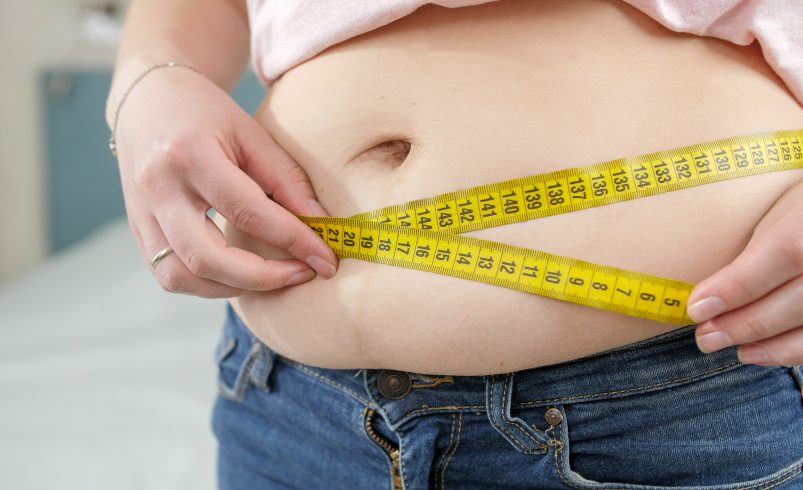

5 Reasons You’re Not Losing Fat & How To Supercharge Fat Loss
There are 5 reasons you have bodyfat, so let’s break it down and get right to the point:
1.) You eat too much.
2.) You eat the wrong way.
3.) You’re not exercising.
4.) You’re not exercising the right way.
5.) You have a higher priority health issue going on in your body.
When push comes to shove, it all boils down to one or more of these 5 reasons. Instead of trying to solve all five at once, I’d recommend you tackle them in order. Without doing this, it’s an uphill battle you don’t deserve to fight.
Do you eat too much?
This isn’t about counting calories, necessarily, but that’s important. In general, you should be eating between 1,500 and 2,500 calories per day, depending on your body size and gender. The best metric for determining this is your BMR (basal metabolic rate.) Here’s the formula — figure out how much you should be eating and stick to it:
English BMR Formula
- Women: BMR = 655 + (4.35 x weight in pounds) + (4.7 x height in inches) – (4.7 x age in years)
- Men: BMR = 66 + (6.23 x weight in pounds) + (12.7 x height in inches) – (6.8 x age in years)
Metric BMR Formula
- Women: BMR = 655 + (9.6 x weight in kilos) + (1.8 x height in cm) – (4.7 x age in years)
- Men: BMR = 66 + (13.7 x weight in kilos) + (5 x height in cm) – (6.8 x age in years)
It’s important to note that lean body mass has a direct correlation to caloric consumption. In other words, if you are leaner, you should eat more calories, and you will be underestimating the caloric intake you should have. This really only applies to anyone who is less than 15% bodyfat. The contrary is also true (if you are obese, you need to eat less calories, because you don’t have muscle consuming the calories.)
Once you know your BMR, it’s time to associate this # of calories to your activity level and adjust accordingly. Your BMR is the number of calories your body will naturally burn throughout its day.
So, for example:
BMR = 1800 calories
This means that my body will naturally burn 1,800 calories every single day, without increasing my activity level. Therefore, in order to maintain my weight, I should consume 1,800 calories and I will not need to exercise beyond activities of daily living.
However, if you’d like to lose weight, you will have one of two choices:
- Eat less than 1,800 calories per day.
- Exercise more than your normal activities of daily living (includes parking your car far away and walking — this does not count.)
Important metric: One pound = 3,500 calories
So, if I want to lose 1 pound per week, I’ll need to create a caloric deficit of 3,500 calories over the course of the week, or 500 calories per day. This means that a mere 500 calories of exercise per day will accomplish my goal, so long as I don’t overeat on any one day.
When you exercise more, you’ll lose weight faster; when you eat less, you’ll also lose weight faster. The big question becomes: how much food can you sacrifice before you actually harm your metabolism?
Anything below about 1,300 calories (tiny frame, female) and 1,500 calories (tiny frame, male) will be dangerous for your metabolism. You’re simply not allowing your body the required energy to function, so it slows down and begins to migrate into a hibernation-like state. Your metabolism plummets, and so do your weight loss results. You may lose weight, but you’ll have a heck of a time keeping it off.
This is why increasing the amount of exercise is much smarter than caloric restriction. Eat at least your BMR and then exercise your bodyfat away.
Do you eat the wrong way?
Forget the food pyramid — sorry, but it’s crap. It’s meant well, but it’s misguided. I’ve seen example after example of a high fat, high protein, low carbohydrate diet winning for fat loss and overall health. In extreme cases, I’ve seen heart disease completely reversed in 90-180 days after a heart attack by modifying your diet to high fat, low carb. The reverse has equal potential to sabotage your health and damage the inside of your body. Many times, your bodyfat is an indication of the overall health of your body, on the inside.
When you see unwanted bodyfat, your body is trying to tell you something — you’re not as healthy as you should be. Weight is one consideration, but depositing fat is a red flag that something is wrong.
Get your bodyfat down, as follows, according to the American College of Sports Medicine (ACSM):
- Men – 10-20% bodyfat
- Women – 12-25% bodyfat
If you’re over 20% bodyfat as a man, or 25% bodyfat as a woman, you’re unhealthy.
Your blood work may be ok, and your doctor may be telling you that everything is fine, but your body is experiencing a downward spiral; it’s only a matter of time until it all comes crashing down. Get your bodyfat where it belongs, and then become concerned with your BMI (Body Mass Index.)
Body Mass Index Formula: [Weight (kg) / Height (meters squared)]
BMI over 25 is considered overweight. Over 30 is considered obese, and it gets worse from there, in increments of 5. (level II obesity, level III, etc.)
Yes, this matters for risk of cardiac disease, even if your bodyfat is low, because your heart is working too hard to pump blood to your body. But, the fact of the matter is that this affects about 1% of the population. The rest of us should be concerned with bodyfat %.
Let’s get back to eating the ‘right’ kinds of food. Here’s the scoop:
High fat diets produce sustained energy and they fill you — low fat diets destroy your energy levels and create massive carb cravings — protein feeds muscle, so if you’re building muscle to lose fat, you’re going to need protein to keep your results flowing.
A lot of people ask me about ‘carb crankiness’ and that’s an important question to answer. Consider the ‘quality’ of the food you’re eating, rather than just the macronutrient classification. Here are some simple rules to help you defend against carb crankiness:
- Make sure you are taking some sort of supplement (I take Athletic Greens for this) that will fulfill all of your micronutrient needs.
- Never eat trans-fats. The inflammation caused by trans fats and preservatives that are in your food are changing the way your body absorbs the nutrients you eat, and in all likelihood, you are getting a small percentage of caloric density from the food you chose wisely as a result of these compromised food choices.
- Remove sugar from your diet. Sounds hard, but that’s only because you are addicted. I hate sugar. There, I said it, and I’m just as addicted as you are. I hate it because it owns me, in some way, shape or form. It’s worse than the tobacco industry, in that sugar addiction reaches populations that tobacco never will. We’re trained to believe that sugar is a reward from a very young age, and we associate it with positivity and good behavior and experiences. You have to hate sugar for doing this to you, or you’ll never conquer it. Sugar is destroying your body, and you’re letting it happen, whether you mean to or not.
- Eat veggies for carbs, and stay away from more than 1-2 servings of fruit per day (better yet, once every few days.) Starchy foods, flour, and wheat all suck. They’re not meant for our bodies, and they are messing with our digestive systems in a totally uncool way.
- Avoid grains, soy, and corn. They mess with your hormones and affect your digestive tract in an ungodly way. That’s all I have to say about that.
Follow these 5 rules and you’ll easily transition into a healthy diet that ‘feels’ great and rewards you every day of your life with better health and longevity. Plus, you’ll shed fat ridiculously fast.
One important point here — only make this commitment for 3 weeks to start, and then re-evaluate. You’ll stand a much higher chance of success.
Do you exercise, regularly?
Be honest. Are you resistance training at least 2-3 days per week? If you’re not, there’s a huge gap in your fat loss and health journey that’s keeping you from success.
As human beings, we are extremely lucky to be able to exercise for as little as a few minutes per week and see our health progress. Historically, we needed to run and hunt for 8-12 hours per day, and that helped us maintain our health. Often times, we had to run on an empty stomach the whole time, alternating between ‘hiding and hunting’ and ‘sprinting for the kill.’ Today, we barely have to move and our health soars… It’s a small
commitment, but it’s a necessary one.
My preference is that you commit to 10 minutes of exercise 5 days per week, or 20 minutes 3 days per week. It’s simple, and you’ll see a tremendous difference.
Are you exercising correctly?
I discuss this in great detail on the post How To Get Lean In Less Than 1 Hour Per Week Without Dieting. As a summary of what works, here’s what I recommend:
- ‘Traditional Cardio’ (i.e. running, walking, swimming, etc. at a moderate and sustained pace for 40-60 minutes) has a lot of benefits, such as endorphin modification and regulation, stress relief, improved circulation, and oxygenation to muscles, ligaments, and other tissues.
- ‘Interval Training’ has a great fat-burning effect, but it’s tough on your body and it doesn’t build any muscle unless you incorporate resistance training to your interval-based workouts. You’ll need muscle to avoid plateau.
- ‘Resistance Training’ has great ‘muscle building’ and ‘muscular endurance’ benefits. When you do this while alternating high and low intensity work periods (i.e. metabolic resistance training), you’re able to create a massive fat-burning effect and progress your muscle to fat ratio, which will raise your BMI.
Is there a higher priority health issue that’s preventing fat loss?
There are several reasons that your body may be preventing you from losing fat, but they all boil down to the same principle — your body is trying to tell you something is wrong and it needs to be fixed.
I provide you with a screening tool that will help you determine which ‘higher priority’ system in your body may be preventing fat loss in Body Sequencing For Fat Loss.
With that in mind, there are a few common reasons that most people are not losing fat:
- Hormonal Abnormalities – in today’s society, hormones are out of control. This is a result of the hormones in our food, consumption of sugar, the stress of a two-person working family, ultraviolet lights in our office spaces, pollution, and other environmental stressors that cause up-regulation of cortisol, down-regulation of DHEA, or alterations in the levels of insulin and/or growth hormone. If your hormones aren’t normal, you’re going to have a heck of a time losing fat and getting healthy. Your body is responding differently than anyone can predict, and none of the above rules will create the response for which you’re hoping.
- Joint Pain – if your joints are screaming at you, they’re sending a signal to your brain to ‘turn off’ the signal to your muscles for them to contract. Re-align and stabilize your joints and watch your bodyfat disappear.
- Triglycerides – if your body is having a tough time breaking down carbs and utilizing them for energy, you’re depositing these carbs as fat. Again, eat veggies as your carb source for 3 weeks and enjoy a new level of fat loss.
- Heart Disease (or high risk of heart disease) – if your body thinks it’s about to suffer a cardiac event, it will help you avoid intense activity by making you tire out quickly and rest. Without hitting high intensities during exercise, it’s nearly impossible to sustain fat loss and improve your health. In this case, you have to build an exercise tolerance by working on Steady State Heart Rate Training (SSHRT) and progressing from low intensity (40% max heart rate) to high intensity (85% max heart rate and higher) over a period of weeks or months. Otherwise, you’ll immediately hit your ‘lactate threshold’ and you won’t be able to continue exercising.
- Digestive Issues – this is a communication issue between your two branches of your Autonomic Nervous System, your ‘parasympathetic’ (rest and digest) and your ‘sympathetic’ (fight or flight) systems. One easy suggestion that improves results rapidly is 60 seconds of diaphragmatic breathing anytime you go to the bathroom or you exercise. Your diaphragm is innervated by your parasympathetic nervous system, so you can actually calm this system by first purposely engaging it before you exercise.
By working on each of the 5 reasons you’re not losing fat that are listed above, in order, you are taking a comprehensive look at your fat loss and health obstacles that are preventing fat loss. Lose fat and improve your health. It’s your job, and it’s your body.
It’s time to motivate, with a plan that makes sense.
Please leave your comments and questions below — I’ll be glad to pop in and help.

77 Comments
-
Thank you for all the information posted it was really helpful and informative.Can you please post a BMI formula with weight in pounds and height in feet and inches please.I also think that there was error in saying lose 50lbs per day for a week to lose 1lb of fat 500 per day is probably what you meant to post.Thanks again.
-
50 pounds per day would be a hard task too 🙂
-
-
Hi Dr K,
Wouldn’t 3500 calories per week equate to 500 calories per day, not 50?-
My question as well.
Also, I would appreciate a reference for the BMI formula.
-
Sure thing – I’ve been carrying that BMI formula with me for quite some time now, so I don’t think I have an exact original reference, but you can find the information all over the place. I googled ‘bmi formula’ and found this useful website: http://www.bmi-calculator.net/bmi-formula.php
hope it helps!
-
-
yes, already being fixed – thanks for the heads up 🙂
-
-
I think this article hepls a lot ! Thank You Dr.Kareem !
-
Thank you this has been very informative & I have learned a lot.
-
Thank you for posting this interesting and useful information. One question: why do health blogs still focus so obsessively on body aesthetics as opposed to body performance? The average age of “health consumers” is rising and priorities are shifting. As a 48 year old male in good condition (185 cm, 78 kg), frankly, wowing the girls at the beach is not high on my list of priorities. On the other hand, as I get older it is vitally important to me to maintain a high level of body performance in order to keep up with the activities I love, viz., mountain biking in the summer and ski mountaineering in the winter. By “performance” I mean general good health, strength, endurance, agility. It seems to me that the primary emphasis of any training program should be body performance gain rather than body fat loss per se, right? Although the latter will presumably follow as a natural consequence of the former…
Minor comment: there seems to be a typographical error in your calculation of calories burned per day – consequently off by an order of magnitude (should be 500 , not 50).
Thanks again for your posting.
-
Any hints for someone who takes insulin?
150 Units of long-acting daily plus 40 units of short-acting per meal. (and rising)
-
What would be the answer to hormonal abnormalities?
-
Dr.K, I am following a program that involves three compound exercises per session and I do that 3 days a week. Nothing for the remaining 4 days.I don’t do “cardio” of any type. My sessions run between 45 minutes to 1.5 hours. Is this sufficient for strength training and fat loss ? I am also told BMI is a misleading indicator. Can you comment ?
Thanks
-
so insightful – and very helpful – Thank you!!
-
Please explain diaphragmatic breathing
-
Great information!!! Thanks!!
-
Excellent, informative article! Thank you so much! I consider you one of the best and most credible fitness gurus online!
-
I heard all my life that fruits are good for our health, why we should avoid fruits ?? .. a lot of articles I read talk about the good of fruits for loosing weight, such as, apples, grapefruits, berries, etc…. those fruits should be avoided too ??… If the total calories including fruits are below the required calories for loosing weight, do you still recomend to avoid the fruits in the diet ??
Tanks for your suppport !!!
GS
-
Great article! The USDA Food Pyramid is an absolute joke, you are so right! Every time they change it to lower fat and higher carbs, our nation just gets sicker and sicker, and fatter and fatter…
I think there was a typo, bc you said in order to get the 3500 calorie deficit is to reduce calories by 50 per day, but that should be 500 per day x 7 days = 3500.
Thanks again, great information. It’s nice that I am starting to see this “accurate” information about the composition of our diets in more and more different sources.
-
Great information!! I follow your blog and take away some useful insight. Using what you relate in your postings the last couple months I think I have felt better health-wise and body weight-wise than I have in years (although I still have a ways to go). 🙂 One small observation…if one pound = 3,500 calories, then we need to do a daily deficit of at least 500 calories, not 50 as the article mentions, in order to lose a pound a week.
I can’t wait to see my results in the coming weeks!!
-
In the above…
Important metric: One pound = 3,500 calories
So, if I want to lose 1 pound per week, I’ll need to create a caloric deficit of 3,500 calories over the course of the week, or 50 calories per day. This means that a mere 50 calories of exercise per day will accomplish my goal, so long as I don’t overeat on any one day.3500 / 7 days a week = 500 Calories per day… NOT 50!
Lou…
-
thanks for catching the typo, Lou 🙂
(was originally 500, just lost in translation)
-
-
Great information. However, I’ve read that according to BMI numbers, people like Michael Jordan are considered fat. I know that this is because of his height but it is important to make note of this fact. I’m sure the BMI is an accurate measurement tool for most people. Thanks Dr.K for all the great information. It is very obvious that you are really into this and your experience and knowledge in the field of health and nutrition is recognized and appreciated!!
-
hey Larry,
Awesome point – I commented briefly on this, above, but there’s more to the story.
Yes, there is a top 1% of athletes, or so, that are considered “overweight”, not “fat.” And, in truth, they are. I personally think they are extremely healthy, and they have a lot going for them, but believe it or not they are at increased risk of cardiac disease, according to the American Heart Association.
They’ve looked at the “super athlete” population, and they’ve seen increased risk of cardiac diseasse, although you might presume this has to do with adrenaline release throughout the lifetime, or other factors.
That’s why I think it’s smart to ‘consider’ BMI, and relate it to Body Fat. Our best medical research still suggests that BMI is important, even if you’re in great shape.
However, our best training clinical knowledge shows a MUCH healthier body when your bodyfat is low. Leanness is hugely important, but this doesn’t discount how important it is to consider the overall weight of your body in terms of the strain it places on your heart.
In the case of Michael Jordan, I don’t believe that’s true, but I’d have to know his numbers. He’s plenty tall, so he’d probably be good to go….
However, football linemen in the NFL, who are low bodyfat % and a bit shorter and stockier would be at risk. Plus, when you consider the impact that heavy, power-based training can have your heart over time when done with such frequency and repetition, heart risk goes up further.
You see, there are two forms of “heart hypertrophy” (size gains in your heart):
Intraventricular Hypertrophy – inside of the left ventricle of your heart you can size, which allows you to pump blood more effectively, but it narrows the chamber by decreasing the space.
Extraventricular Hypertrophy – outside of the left ventricle of the heart (outer wall) thickens — this provides the same benefit for helping your heart pump more blood, but it keeps the chamber the same size.
In cases of Sudden Cardiac Death (common with the high school athlete that is a football lineman), we see a narrowing of the chamber of the heart, or intraventricular hypertrophy. This is only a correlation, but it’s one of the main reasons that we think this is happening.
With that in mind, here’s what’s happening — BMI goes up, but for a different reason — too much mass on too small of a frame, as happens when you exclusively power train. Now, the left ventricle in the heart doesn’t have enough room to expel the blood, and the body becomes deprived of oxygen.
So, it’s a balance, but BMI remains a valid indicator, as much as “us trainers” would hate to admit it…
hope this helps!
-k
-
-
This is an excellent article. I know a great deal about exercise/nutrition (science degree in Kinesiology) and everything stated here is right on.
Humans definately don’t get enough exercise… the recipe for health is as simple as stated above. Exercise EVERY DAY and eat only what comes naturally from our earth. And I agree, sugar sucks, luckily I don’t care for it.
-
I’m vegan and try not to eat lots of soy. What are your thoughts on legumes, pulses, quinoa etc? Would you think nuts were a better choice for protein?
-
Look at hemp hearts for protein.
-
-
Hello Dr. K,
AWESOME ARTICLE***
THANK-YOU,
PAUL -
Is it just me, or is there something wrong with the formulas? I have done it and redone it both in English and metric, for male and for female and it comes out way, way too low (like 1300 cal).
And why doesn’t this method include activity? Caloric needs are far different for a sedentary person than an active one… -
Thank you for your committment to “us”…I have been following you and “Isabel” for a while now and absolutely agree with both of you…and am impressed with what I see as your true love of helping others! I am a homeschool mom, with my kids involved in a parent partnership program through a public school…and for the schoolyear 2013-2014 am putting in a proposal to “teach” a PE class at that partnership…because I too find it so important, expecially for young kids, to be active, eat healthy. I’m wondering though, if anyone can help me…for when it comes time to “teach” proper eating to kids…or when I tell them “whole wheat bread is not good for you…”, or I tell them the “my plate, or food pyramid are not the way to go…” I’m unsure as to how to go about that, without parents calling me wondering what the heck I’m telling their kids. Any tips would be greatly appreciated…and thank you for listening…
-
Great information, as always Dr. K. Thanks for putting it all together in such a useful format. I can relate to the comment by john.mckinney that maintaining body performance is far more important than body aesthetics. It’s just a bonus that you get to look awesome through healthy exercise and diet habits.
The ability to do what you want, when you want – sustainably – seems to sum up life at it’s best. No matter how good I think my daily practices are, it’s always good to have a reminder to stay on track. -
You forgot a higher priority health issue, or at least you didn’t list it under hormonal abnormalities: hypothyroidism. If you have any advice for that, please help. Because of hypothyroidism, the other four issues are also compromised. I’ve tried everything, from modifying my diet, to how much I exercise and how, and nothing seems to work so far. Any ideas?
-
Hi Dr K, great article as ever, so informative. Just one thing I wanted to ask, you say that you should ‘only consume 1-2 fruit helpings a day, better yet, every few days’, I eat generally eat 4 types of fruit during the day as I thought it was healthy and to stop me nibbling at bad stuff like chips. Am I do myself a diservice and should cut it down to what you suggest if I want to lose the weight I am trying to? Appreciate your advice as always.
-
Paleos call them “sugar bags”.
-
-
Hi you said stay away from grains. Are oats grains I eat them nearly every day should I ?stop
-
I loved this article. Thank you for providing such a WEALTH of information. So, in short, the best way to lose weight is to follow a high fat and protein diet with low carbs coming mainly from vegetables, right? I would greatly appreciate a response. Thank you, Nazli
-
I would really appreciate and be grateful for more such articles. Thank you, Nazli
-
Hey Kareem,
Under the Are You Exercising Correctly section at the end of the resistance training session, at the end you mention that the increase in muscle to fat ratio will increase you BMI. I think you meant to say BMR. We don’t want that BMI going up! 🙂
Thanks for all your great stuff. I am a fan for life.
Lisa-
Not true at all. BMI is a useless measurement of anything. I am a very lean bodybuilder with lots of lean muscle mass so my BMI is very high. Obviously a meaningless figure. Don’t worry about BMI.
-
-
hi if im not supposed to eat grains, soy, wheat, flour and corn what r d substitutes as either rice or rotis form an intregal part of my diet
-
If you dont change anything you do except add in two sessions of metabolic resistance training sessions per week, can you lose weight?
-
One of the best articles I read about this issue. Thank you.
Question for you, in reference to Hormonal Abnormalities, how do you recommend to have this checked to know exactly what the body needs?
Thanks again! -
I am a bit nervous about having no grains (brown rice, quinoa…) at all in my diet. Won’t I miss some types of vitamins? I am losing hair more than normal and had a blood test by my doctor. I don’t eat any process food, and avoid any unhealthy sugar (just have 2-3 cups of tea with stevia a day). It was my understanding that vitamins in grains are good for skin and hair.
-
Lababla, I do know that quinoa is a healthy grain so you can carry on eating that. I hope everything is ok with your blood test.
-
Quinoa is great for you, it’s not a grain, it’s a seed.
-
-
what do you think about HCG to aid in weight loss?
-
How much protein should you have everyday? I hear so many different answers.
-
dr kareem, if your working out early in the morning, do yuo recomend training on an empty stomach (dr mercolas recomendations)??
Great articul and great information in your site!!
Thanks from Chile!!-
hey Maria! That’s a great question, and the answer is debatable. My answer is to do whatever gives you the best workout. Personally, I prefer working out on an empty stomach, but this hinges on me eating a good meal the night before and being plenty hydrated. Sometimes, I like to have a smoothie before a morning workout, mixed with some greens, etc. This helps balance micronutrients, hydrate me, and make me feel great before I start exercising.
-
Thanks you very much!! Was a great and pleasant surprise to find your answer this morning (for me in Chile, now it´s 9 am)since i posted my question long ago…
Since them I’ve figured out that i can do very well on an empty stomach, especially cardio and HIIT, and generally when i do my strength sessions´, I have a little of kefir or greek yogurt mixed with flaxseed, chia collagen and a pinch of liofilizaied maqui berry that has a gret ORAC, before.
Thanks again
blessings and Hugs!!
-
-
-
Hi, I am having trouble getting my glucose
level down. It was 137 last time it was checked. I eat well & excercise. What else can I do? I can’t lose a pound? Thanks for any help.-
You must reduce carbohydrates.stop taking sugar in any form. Defenitely your glucose level will go down.
-
-
Thanks for the wonderful article!
Question: my BMR came to 1351 (5’5″, 40yo, 133lb). I really could loose some weight but I cannot reduce calories having such low result. What to do?Thanks!
-
Very good and useful article
-
I exercise 6 days a week. But i dont reduce weight. I take low carbs diet. What would you suggest
-
Have you considered if you might have a higher priority health issue going on right now? Maybe a digestive issue, hormonal imbalance, or something like that? Also, when you say you’re eating ‘low carb,’ it’s still very possible to eat the wrong foods. The goal should be to ‘only’ eat whole foods; so, foods that come from nature, not that are manufactured.
-
I use the treadmill for 40min.and do strength training for 30min 6days a week. I take 5oz of nuts for breakfast, a bowl of veg, and two pieces of fish for lunch, and an egg and vegetable for dinner. I do not have any other health issue. What more is needed to reduce weight.??
-
Try short burst intense training on tread or bike. ie. All out on tread mill or bike 7 seconds relaxed movement 8 seconds or increment’s there of 10 second high intense 20 seconds relaxed until fatigued, try and achieve 5 min. Alternate this cardio with weight training, this will sure to improve weight loss and improve cardio and muscle tone.
-
-
I am 72 kgs, 5feet 4inches, suffering from PCOD and this has brought a lot of health issues in my life. Insulin resistance, acne, stomach pains and migraines on a daily basis. My insulin levels are good now after taking metformin 1000 gm past three years….scaled down to 1000 from 1500. I am also given a small dose of Aldactone, walk around 11kms almost every day except for week ends, climb four flights, don’t have sugar, bakery or white foods, my grains are very limited yet my scale doesn’t budge. I want to be free of headaches, ( no msg, coffee) stomach issues and want to lose at least five kilos to begin with. I am told exercise is my best medicine. I used to run a lot on the treadmill but have hurt my knees very badly hence do not go to the gym. I am also unaware of the kind of exercise I should be doing for my condition. Please help!
-
-
-
-
Very Good
I am one of those in that 5 list -
I’m a 70 yr old female who has enjoyed a very active & healthy life style until 15 yrs ago when I was diagnosed with RA, an auto-immune disorder. This has seriously impacted my aerobic activities & steroids prescribed have caused a steady weight gain of 40 pounds since the diagnoses. In the last year I had major back surgery & surgery on both ankles requiring a lot of down time. I’m working full-time, as a therapist so a lot of sitting. The Atkin’s diet & way of life has always worked for me but doesn’t seem to work at all now. I take meds for hypo-thyroidism, narcolepsy & RA. I also take many supplements. I am now considered overweight per BMI. My blood pressure is low (68/110), my blood sugar is normal & my cholesterol & lipids are excellent (yrs on Atkin’s). I am determined to lose weight (would help lessen the pain in my arthritic knees & feet). I have gotten a stationery bike I ride 20 mins a day from low to high to low intensity. I can do some Pilates as long as I don’t have to put a lot of weight on my hands. Psychologically, I feel like I’m not exercising at all compared to years of aerobics, weight lifting, cross country skiing, long bicycle tours, etc. So far, after two months of concentrated diet & exercise I have lost one pound & am very frustrated. Do you have any suggestions that can do to get better results? Something I’ve missed? I’m very afraid I’m heading for heart problems. Thank you in advance for your consider in my seemingly hopeless life.
-
hi Patricia,
I’m really glad you reached out. This sounds all too familiar to me, as my mother suffers from many of the same issues you’ve described. I’m sorry you’re in pain, and I look forward to you feeling better soon 🙂
A few thoughts:
1) Resetting your metabolism may be a good idea. The best way to do this is by simply eating foods that are great for you. Build a list of foods that give you incredible, focused energy (and less pain) after you eat them. At first, the list can be small, but build on it as you learn. Equally, learn what you cannot eat, for it makes you feel worse. The goal is to ‘only’ eat the foods that make you feel great, but no matter what, ‘never’ eat the foods that make you feel badly.
I call this the ‘Inclusion-Based Diet’.
2) You are a perfect candidate for the Personalized Anti-Aging Blueprint, and I can’t imagine anything would help you more right now. We’re giving it away for free (with a tiny donation for hungry children) right here:
https://readytolookyounger.com/the-free-personalized-anti-aging-blueprint-v7.php
The goal is figure out the highest concern health issue and work on that one issue for the day. Move on to the next tomorrow, next week, or after a couple of months when you know you’ve made progress. This is the fundamental difference between approaching health in a long-term, sustainable way, and the typical approach that results in blockades and frustration.
3) I strongly urge you to consider meditation. My resource for meditation is Emily Fletcher: http://ZivaMind.com.
4) Consider the emotional-gut link. How you feel when you eat — and while you digest — most likely impacts nutrient absorption. So, you can eat the right things, but feel the wrong way, and your body will respond differently. This is a clinical observation, and something that fascinates me at the moment. I think you’ll hear me discuss this topic in greater detail soon.
5) Believe. You have to be able to see yourself, completely capable and pain-free, in today’s situation. You’ve been losing movement and capability for years, so the imagination wanders in the wrong direction, wondering how much worse it can get. Instead, envision the outcome you seek: feel great. Feel like yourself, at your age, with the weather outside that you see today. Imagine the fastest possible transition you can think of, and then work backwards. It all starts with believing, and your outcome is bound to be 10x better when you take this step.
-
-
Dr. K, Thanks so much. I will soon check my body fat at the gym, or is there a way to do this at home? Up to 25% is a good goal, not sure where I am with this. I have been noticing much relief in joints now. This is good since have been diagnosed with a compromised immune system. I think the body balancing has been very helpful for this, as well as the new cleaner diet. I am thankful for you!
-
Hi I am a 54 and half year old female. I worked in a Bank for 33 years, the later years being part time. Unfortunately I was made Redundant. As I saw this coming I retrained, and became a Qualified Driving Instructor before I actually left the Bank.
My life has been a lot less active since becoming a Driving Instructor, because over the 4 years as an Instructor I was working long hours, sometimes 12 or 13 hours a day. I must admit I did not have a healthy diet as I would just stop and grab what I could. I mostly lived off of black coffee albeit without sugar. I also earnt enough that I could afford to go out for meals and for drinks. At this time at 5’7” I weighed between 15st 10lb and 16st 4lb.
Two years ago next month I had an horrific car accident where I almost died. I was helicoptered (THIS REALLY BEING THE WHOLE REASON FOR ME STILL BEING HERE). My family were called in to say good bye.
Anyway…… I had some fantastic surgeons and Consultants and they saved my life but said that I would never walk again.I spent 6 months in hospital but over the last year or so I have been having a lot of physio and can now walk with crutches although not very far….but I have left the wheelchair behind and only use it occasionally.
I put on a lot of weight in hospital and went up to 19st 1lb. This was a major shock to me when they weighed me in October last year.
I lost just over a stone 10 months ago and have kept that off. However I have tried really hard to lose more but ended up back at 18st 4lb I did get down to 17st 6lb.I am so very desperate to lose weight. I am on so much medication including pregabalin and morphine.
My mobility is very restricted, but not only the that, the pain can be extreme.
WHAT CAN I DO…..HELP ME PLEASE.
-
Hi Anita. I’m sure Kareem will have some good advice for you but in case he doesn’t get to answer soon, I am a naturopath with over 10 years experience. In the last few years I have suggested all my clients, particularly those with weight problems get off gluten-containing foods especially and for at least the first 3 weeks dairy. Plus you might just want to try staying off eggs, soy, corn and definitely avoid sugar and sweeteners except stevia (some people do react to stevia though but you will know). Also avoid vegetable oils and stick with coconut oil for cooking with and olive or avocado oils for salad dressings.
Just going off the grains has had an amazing effect for many people. Don’t be tempted to go and get gluten-free pasta, bread, crackers and the like – they will simply elevate your blood sugar and insulin even more than sugar and wheat products will and stop you burning fat.
The reason you need to be off the foods I mentioned, and all other highly processed foods is that they trigger inflammation, which in turn elevates stress hormones and keeps insulin high, again stopping you from burning fat.
Changing how you eat is the biggest needle-mover for burning fat even if you can’t exercise and you will start to feel better as the inflammation decreases.
I hope this is helpful for you and you start seeing some progress soon.
-
Thank you so much Krist for your kind advice. I will try this out as soon as I can.
I will post any results.
Thank you so much.
-
-
Hi Anita, I’m so sorry to hear about your accident and we’d love to help you as much as possible, because it sounds like you are making some great progress already.
Unfortunately, without knowing the specifics of your injuries and necessity for medications, it would be extremely irresponsible of me to make suggestions to you over the internet without evaluating you in person.
I can tell you that medications, especially opiates (morphine), can create an extremely difficult environment for weight loss and my first suggestion to you would be continue with Physical Therapy to work on relieving as many of the issues that are causing pain as possible, with the goal of reducing (or eliminating) the need for such prescription pain relievers.
I’d be happy to continue this conversation with you if you’d like to send a message to me at support@drkareem.com?
Have a great day,
Tim
-
-
The information in this article is irresponsible. Research indicates that you should never eat below your BMR because that’s the amount of fuel your body needs to stay alive – keeps your heart pumping, lungs functioning etc. Instead, you should get your deficit from your TDEE by eating somewhere below your TDEE and above or at your BMR (on non-fast days if you follow an IF style diet). Eating below your BMR for sustained periods is dangerous and can damage your body.
-
Hi Hannah, thank you for writing in, but I believe that you may have misunderstood the purpose of this article and completely missed this section:
“Anything below about 1,300 calories (tiny frame, female) and 1,500 calories (tiny frame, male) will be dangerous for your metabolism. You’re simply not allowing your body the required energy to function, so it slows down and begins to migrate into a hibernation-like state. Your metabolism plummets, and so do your weight loss results. You may lose weight, but you’ll have a heck of a time keeping it off.
This is why increasing the amount of exercise is much smarter than caloric restriction. Eat at least your BMR and then exercise your body fat away.”
We completely agree with your understanding of TDEE, and feel that low caloric intake, for extended periods of time, alone is not the proper, or sustainable, way to approach fat loss.
Does this help to clarify our perspective?
-
-
Hi, I am a regular reader of your mails. I am 66 yrs (F). I need to loose nearly 10 kg. In the last 2 moths I have lost 4 kg. after having stopped grains & pulses & sugar of course. I take lots of nuts Almonds whey protein etc. My question is that though I have lost 4 kg, my fat & Muscles % ratio is the same. MY current fat % is 39% and muscles are 22.5%. My weight is 71 kg. So what changes I need to make?
-
Hi Smita, thank you for writing in. We’d love to help as much as we can!
There are a few things that could be going on, but here’s my question for you… How has your physical activity changed during the time that you have been trying to lose weight?
If you are losing the weight simply by diet alone, and not working on increasing your metabolism by strengthening your muscles, it’s a possibility that you are losing lean muscle mass at the same rate as you are fat (or even faster).
If you have not increased your level of physical activity, adding extra protein into your diet may not necessarily be the right move and you could just be adding unnecessary calories to your daily intake.
If you give me an idea of your normal physical activity, we can take a looks and see what else could be going on here.
Hope this helps 🙂
-
Thank you so much Dr. K for your reply. Since last 6-8 months my back & knee problems have increased And physical activities got little less. But now since I am loosing gradually, my exercise level has improved. I do body weight work out 2-3 times a week ( its Pushups, planks, Mountain climbing etc. cant do Burpees well due to back pain) & moderate cardio/ dancing workout 2 to 3 times a week. I dont go to Gym as last year I had knee injury in Gym and so now prefer to workout at home. I am a vegetarian, not even eggs. I take 30-45 gms Whey protein & 1/2 protein bar daily apart from Nuts Almonds etc. Should I increase workout more with dumbbells?
-
Hey Smita, thank you for the follow-up info!
You can build strength/muscle with bodyweight alone, but adding some resistance with dumbbells might help get you there faster. You may also want to consider changing the pace of your exercises. By doing exercises fast one day and super slow the next, you can get a completely different training effect from the same workout.
The exercises that you listed out are great, but are you doing other strength exercises for your legs as well (ie squats, lunges etc)? The muscles of your legs are some of the largest in the body and therefore have larger metabolic potential, so if you are leaving them out of your strength workout and only training them for endurance with the “moderate” cardio that you’re doing this may be a place where there is room for improvement.
The exercises on this page, http://drkareem.com/article/daily-posture/, may be useful for you to bring more balance into your workout and if you need to modify them just take a look at the recent comments that I have made and there are modifications there.
Hope this helps!
-
Hi Dr. K, So nice of you to give such prompt reply. Yes I do Squats, push ups( on knees though), Bridges ( slow though, not fast) & varieties of Planks. Middle Trap is new for me. I do these as HIIT- mostly in ratio of workout 30 seconds /Rest 10 seconds OR 45/15, all together 30 -45 minutes 2-3 times a week. . I will definitely try out your suggestions tomorrow. What should be the timing and frequency of your routine? In my recent weight loss of 4 kg. I have lost in my upper body.( I m a pear shape) definitely need to work on lower body. What to do about very loose fat/ muscles/ skin on the inner thighs & hips?
-
-
-
-
-
Hi! Thank you for this article! Iam a regular reader of your articles.
I just want to ask if taking protein supplements is necessary, or one can rely on natural food. And i hope for vegetarians, grains and dairy are sources of protein.
I have lost 18kg in 1 year, with so many breaks in between in my diet regime.
Now iam noticing that i need more protein after my workout. I shunning powders, in order to avoid any side effects on vital organs.
So if i have to consider protein supplements, what type to go for. Whey protein, soy, or any particular one. Iam 42 years woman with more than 35% body fat. And iam doing barbell squats, and deadlifts with less weight, 5kg plates, 2 times per week.
So please guide me on protein supplements to get rid of body fat, more on tummy.
Thank you!
Shobha-
Hi Shobha, thanks so much for writing in!
Congrats on your success over the last year, that’s impressive!
This is a great question. I actually prefer not to take supplements myself, but recognize that there are a lot of people who can truly benefit from them. I feel that I get enough protein from my diet and stick with that.
If you feel like your protein intake is too low and you’re considering supplementation, I would recommend finding a grass fed whey protein. These tend to be a bit more expensive, but if you’re only taking it every so often when needed, the higher quality is worth it.
I would strongly suggest avoiding soy protein supplements, because in order to process the soy and extract the protein they have to heat it to a temperature that denatures it and makes most of the protein content unuseable for the human body.
Hope this helps 🙂
-
-
6 hours ago
I am 72 kgs, 5feet 4inches, suffering from PCOD and this has brought a lot of health issues in my life. Insulin resistance, acne, stomach pains and migraines on a daily basis. My insulin levels are good now after taking metformin 1000 gm past three years….scaled down to 1000 from 1500. I am also given a small dose of Aldactone, walk around 11kms almost every day except for week ends, climb four flights, don’t have sugar, bakery or white foods, my grains are very limited yet my scale doesn’t budge. I want to be free of headaches, ( no msg, coffee) stomach issues and want to lose at least five kilos to begin with. I am told exercise is my best medicine. I used to run a lot on the treadmill but have hurt my knees very badly hence do not go to the gym. I am also unaware of the kind of exercise I should be doing for my condition. Please help! -
Hi Tim, Thx for a very informative article. U say “…stay away from more than 1-2 servings of fruit per day (better yet, once every few days.)” I thought the sugar in fruit was more than compensated for by the other nutrients (fibre, micro-nutrients etc), so is that point of view incorrect?
Gopal Rao


Comments are closed.